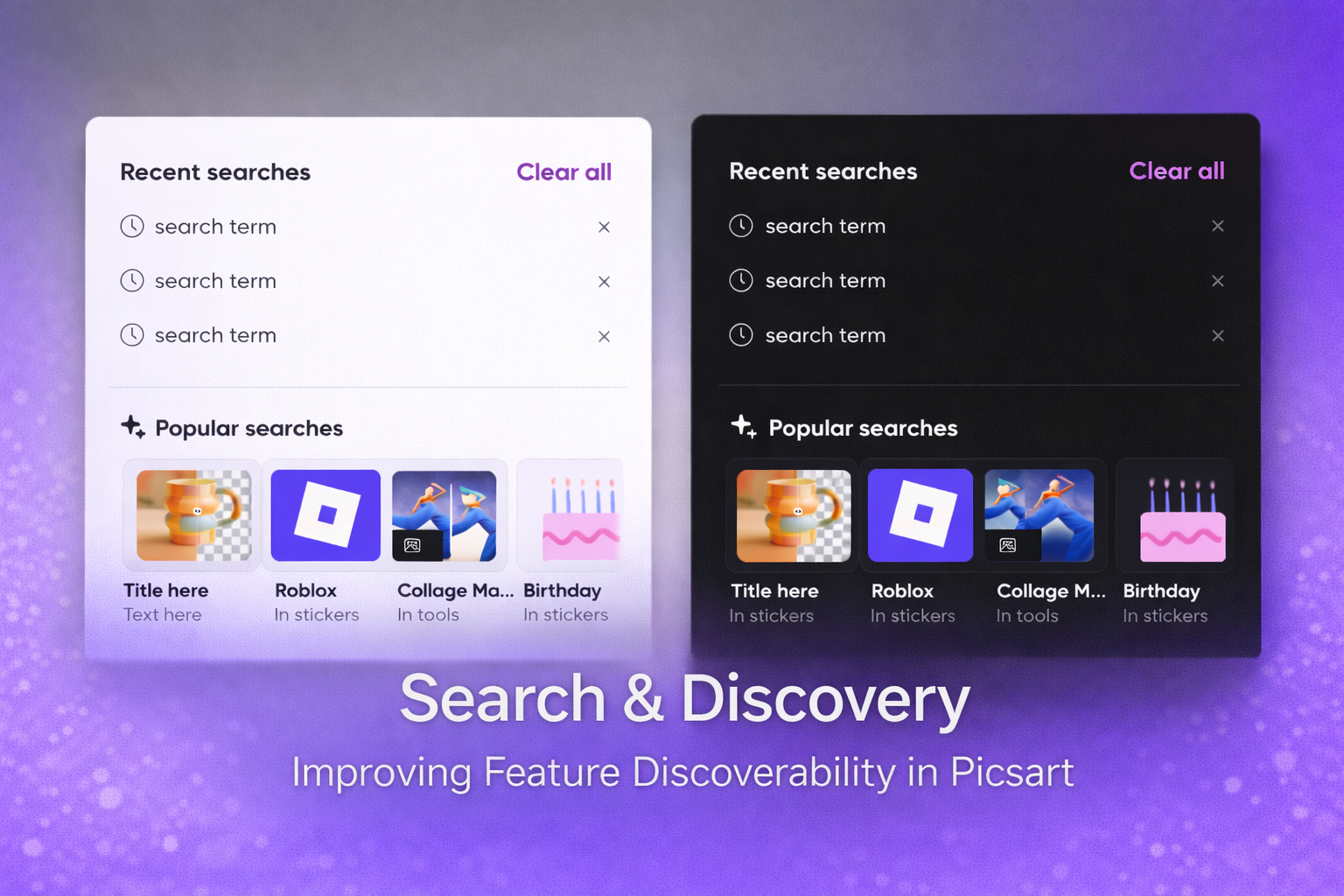
Search & Discovery: Improving Feature Discoverability in Picsart
Overview
Search in Picsart supports templates, images, tools, effects, and other editing capabilities.
In practice, most users used it mainly for finding visual content, which limited the discoverability of the product's full functionality.
Objective: Improve the search experience to better align with user expectations and make more features discoverable.
Problem
The search experience showed a clear gap between product capabilities and user expectations.
- •Users associated search primarily with templates and images
- •Tools and effects were rarely discovered
- •Category tabs (tools, images, stickers) were unclear — users didn't know if they were filters or browsing options
- •"Popular searches" felt distracting or unnecessary for some users
👉 The system worked, but its structure and presentation did not match how users think about search.
Role
- →Product & UX Designer
- →Conducted research and synthesized insights
- →Defined problem areas and solution direction
- →Collaborated with cross-functional teams across web and mobile
Research
We conducted an unmoderated usability study to understand expectations and behavior:
- •6 participants (mix of new and experienced users)
- •13 tasks covering real use cases
- •2 segments (PA users and Non-PA users)
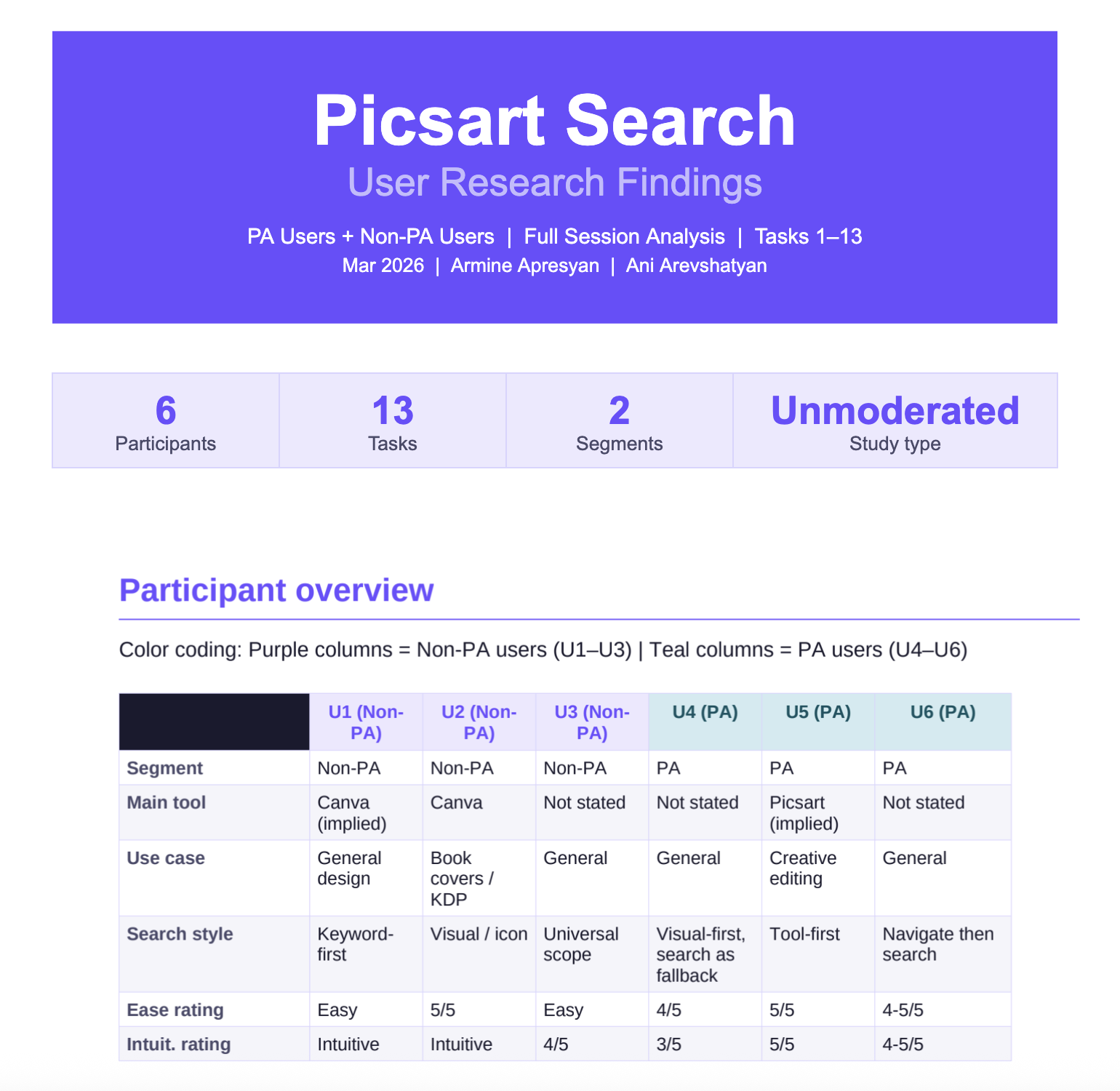
- •Templates were the primary expectation across all users
- •New users relied on search as a starting point, while experienced users used it as a fallback
- •"Recent searches" was consistently useful and expected
- •Users expected search to be more context-aware and intelligent
Approach
The redesign focused on two directions:
- •Aligning search with existing user mental models
- •Expanding feature discoverability without increasing complexity
Solution
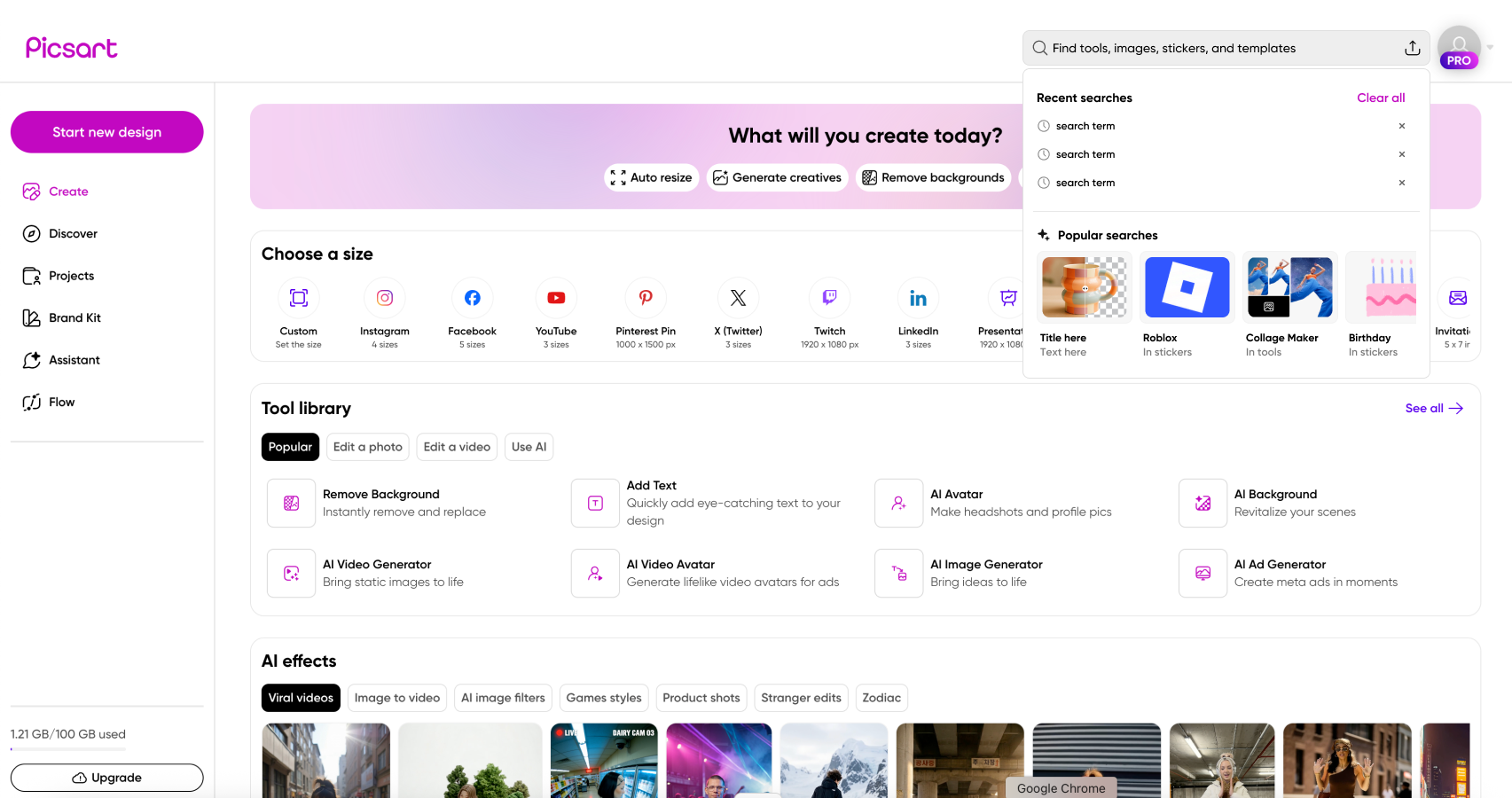
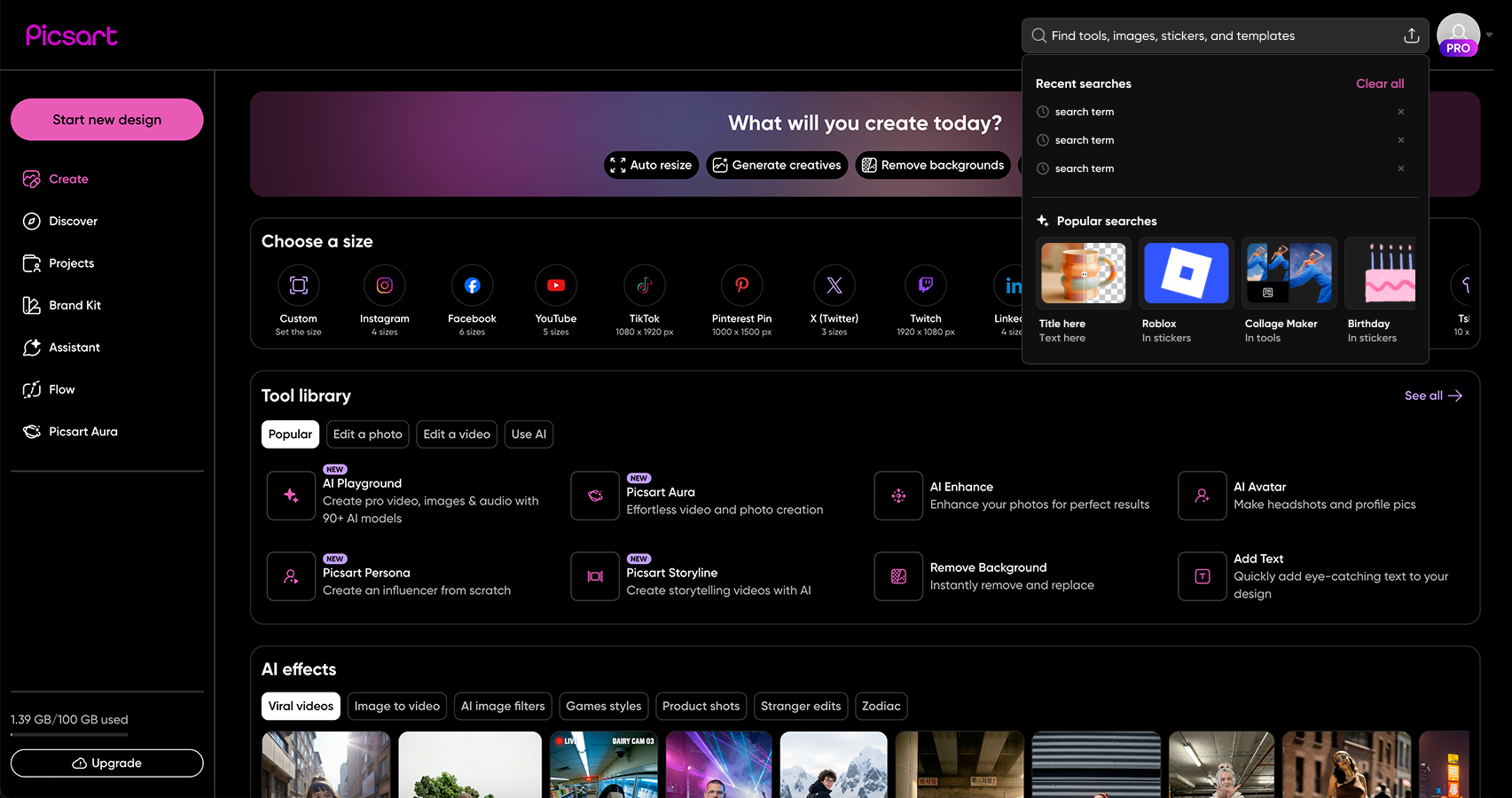
We improved the structure and clarity of the search experience:
- •Clearer organization of results (templates, tools, effects, images)
- •Reduced visual noise in the search entry state
- •Clarified category tabs to remove ambiguity
- •Reconsidered the role and placement of "popular searches"
- •Strengthened visibility of recent searches
Light Mode
Dark Mode
Mobile
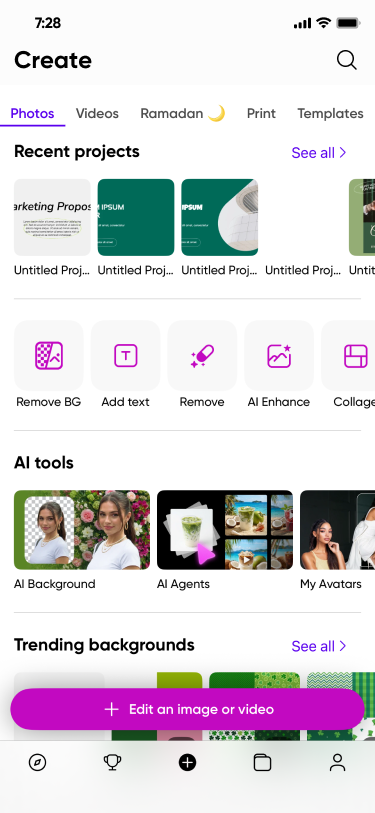
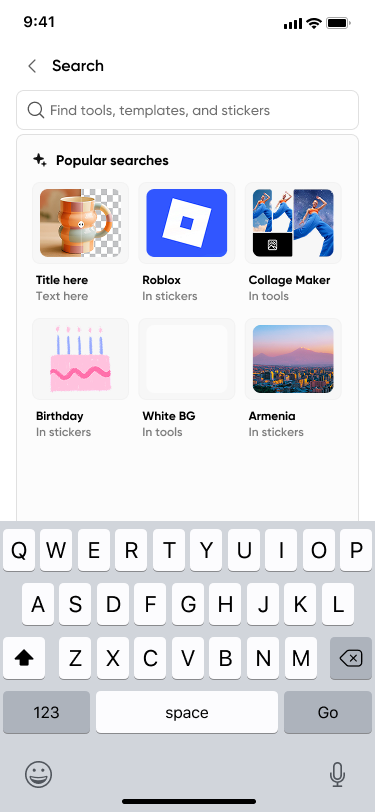
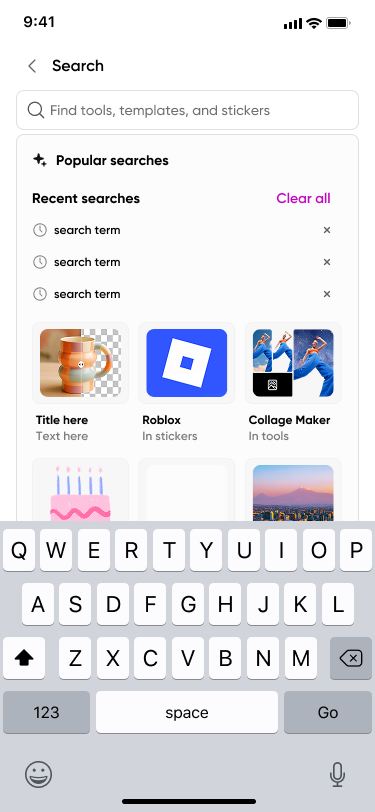
Mobile search experience showing create page, popular searches, and recent searches
Impact
- ✓Improved clarity of what users can search for
- ✓Increased discoverability of tools and effects
- ✓Reduced confusion during first interaction
- ✓Strengthened search as a product entry point
Key Learnings
- →Users rely on familiar patterns when interacting with search
- →Discoverability depends on presentation, not just availability
- →Clear structure is critical for complex, multi-content systems